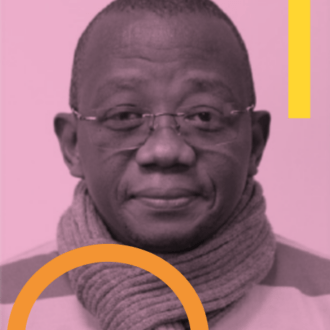
Rochefort Joubert
Deputy Coordinator at the Bureau for the Coordination of Decentralised Bodies
Ministry of Social Affairs and Labour, Haiti
"This training gives everyone who completes it a sharp, analytical eye and a solid set of tools for working on social policies"
EN3S invites you to meet former international students who have graduated from the Master 2 GEOSS programme. They share their professional journeys and experiences since their time at EN3S.
Could you introduce yourself briefly?
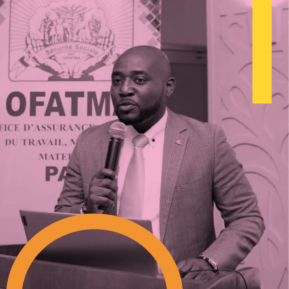
My name is Joubert Rochefort. I hold a degree in journalism, a bachelor’s degree in applied linguistics, and a professional master’s degree in semiotics and strategy with a specialisation in communication semiotics. I am part of the second cohort of the DU GEOSS — the university diploma in social security organisation management, jointly run by EN3S and the Université Panthéon-Sorbonne. I currently serve as Deputy Coordinator at the Bureau for the Coordination of Decentralised Bodies within Haiti’s Ministry of Social Affairs and Labour. Previously, from March 2022 to March 2025, I was Director of Outreach and Communications at the National Office for Insurance against Workplace Accidents, Illness and Maternity — an organisation responsible for two branches of social security: health insurance and workplace accident insurance.
As a member of the second DU GEOSS cohort, what did this training concretely bring you?
This training gave me a deep and precise understanding of social security — in terms of both organisational management and social policies, as well as management and leadership more broadly. On returning to Haiti, it enabled me to organise a Social Security Week where, for the very first time, institutions came together to discuss and co-lead projects related to social security.
But there is another important dimension: the training also helped me develop the skills to work on extending coverage. Through my organisation, I was able to contribute to the Programme Proche — a disability programme that allows people with disabilities to benefit from health insurance coverage without paying contributions. I also worked on the PAM (motorcycle insurance programme), which allows motorbike taxi drivers to access health insurance coverage for themselves and their families.
Above all, I was able to refine the Diaspo Fatma programme, which enables Haitians living abroad to pay for healthcare for their relatives back in Haiti. Among the most formative elements of the training, I would highlight organisational management. To give an example: the project I worked on during the programme — the Botongo project — allowed me, on returning to Haiti, to develop a unified plan. The principle of this unified plan is to enable insured individuals to benefit from the same coverage and the same package of benefits, regardless of their level of contributions, whereas previously, the care a person received was linked to how much they had contributed.
I was promoted to a director role on my return, and I was able to build directly on that project. It also allowed me to apply a revised fee schedule in my country, since affiliated doctors and hospitals had been raising concerns about the existing one. I drew on the lessons of the Botongo project to work on a new fee structure and to propose a risk plan and a medically managed approach to healthcare expenditure. The specific element that prepared me for my current role was my management study on the challenges of compulsory insurance, in which I conducted a benchmark comparison between the French social security system and the Haitian system.
This enabled me to identify major governance challenges within the social security system and to propose avenues for improvement. Today, I oversee the national social promotion and protection policy plan, which means I have the capacity to bring all institutions together and propose a management and objectives agreement for the next five years, with the opportunity for this plan to be evaluated twice a year. This allows institutions to set strategic objectives and work towards the full development of social security and social protection in Haiti.
Would you recommend this training?
This training is essential for anyone working in a social organisation — whether in health insurance, life insurance, unemployment insurance, or within a ministry of labour or social affairs — to master the workings of the social security system. It gives everyone who completes it a sharp, analytical perspective and a comprehensive toolkit for everything related to social policies. I personally encourage future candidates to apply for this programme.